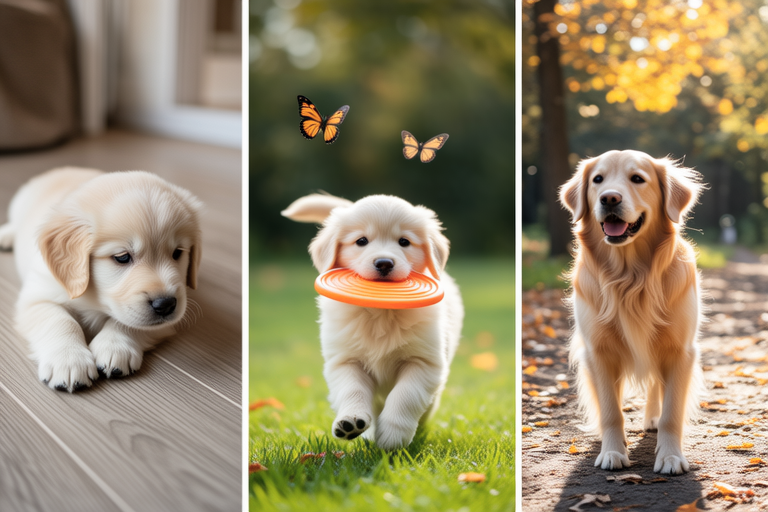
The Golden Retriever’s Journey: From Puppyhood to Adulthood in Photos
Golden Retrievers are among the most popular dog breeds worldwide, renowned for their friendly and affectionate nature. These gentle giants are often found in families, excelling as therapy dogs, search-and-rescue dogs, and loyal companions. Their intelligence, trainability, and adaptability make them ideal pets for active individuals and families alike. This article will take you through the life stages of a golden retriever, from playful puppies to mature adults, all captured in heartwarming photos.
Early Puppyhood: The Playful, Curious Pups
Golden retriever puppies are bundles of energy and curiosity. Typically born weighing around one pound, they grow rapidly during their first year. By the age of eight weeks, they start exploring their environment with boundless enthusiasm. During this stage, they are highly dependent on their owners for guidance and nurturing.

Puppies at this stage are learning basic social skills and commands. They are incredibly receptive to training, which is why many owners begin obedience classes during early puppyhood. Early socialization is crucial, helping them become well-adjusted and friendly dogs. Puppies also develop their sense of smell and hearing, becoming more aware of their surroundings.

By three months old, golden retriever puppies have grown significantly, reaching about 30 pounds. They start teething and may chew on anything within reach, making it essential to provide appropriate chew toys. At this age, they are also developing their motor skills, learning to walk, run, and play fetch.
Adolescence: Energetic Growth Spurts
Between six and twelve months, golden retrievers enter adolescence, marked by rapid physical changes and increased energy levels. They can reach heights of up to 24 inches and weigh between 65 and 75 pounds. This phase is characterized by bursts of energy that can be both challenging and rewarding for owners.

During adolescence, golden retrievers are still learning and growing. They may display some stubbornness or independence but remain eager to please their owners. Training should continue during this period to reinforce good behavior and commands. Adolescents are particularly fond of outdoor activities such as swimming and hiking, making them excellent companions for adventurous owners.

This stage is also when golden retrievers develop their signature coat, which becomes longer and more luxurious. Regular grooming is necessary to keep their fur healthy and free from tangles. Adolescence is a time of exploration and bonding, where the bond between owner and dog strengthens.
Young Adulthood: Intelligent, Trainable Companions
From one to three years old, golden retrievers reach young adulthood, embodying the epitome of loyalty and companionship. By now, they have mastered most basic commands and are capable of advanced training. Their intelligence makes them adept at various tasks, including search and rescue operations and service work.

At this stage, golden retrievers are fully grown and exhibit a calm yet alert demeanor. They are highly trainable and responsive to positive reinforcement techniques. Many golden retrievers participate in agility trials, competitive obedience, and other dog sports, showcasing their versatility and athleticism.

Golden retrievers in young adulthood are also known for their exceptional patience and gentleness, making them excellent companions for children and elderly individuals. Their loyalty and protective instincts ensure they are always there to comfort and protect their family. Regular exercise and mental stimulation are vital during this stage to maintain their health and happiness.
Mature Adulthood: Loyal, Experienced Dogs
As golden retrievers enter their mature adulthood, usually between five and ten years old, they become seasoned companions. While their energy levels may decrease slightly, they retain their loving and loyal nature. Their wisdom and experience make them valuable members of any household.

Mature golden retrievers are often sought after as therapy dogs due to their calm demeanor and ability to connect with people. Their past experiences and training allow them to provide emotional support to those in need. Despite slowing down a bit, these dogs still enjoy walks, games, and spending quality time with their families.

During this stage, it’s important to pay attention to their health needs, as golden retrievers are prone to certain conditions like hip dysplasia and cancer. Regular veterinary check-ups and a balanced diet are crucial for maintaining their well-being. With proper care, mature golden retrievers can live long, happy lives.
Conclusion: A Rewarding Journey
Owning a golden retriever is a rewarding experience that spans decades of companionship, love, and joy. From playful puppies to loyal adults, each stage brings unique joys and challenges. Whether you’re a first-time owner or a seasoned handler, the bond with your golden retriever will be a cherished part of your life.
We encourage our readers to share their own golden retriever stories and photos in the comments below. Let us celebrate the beauty and wonder of these incredible dogs together.
