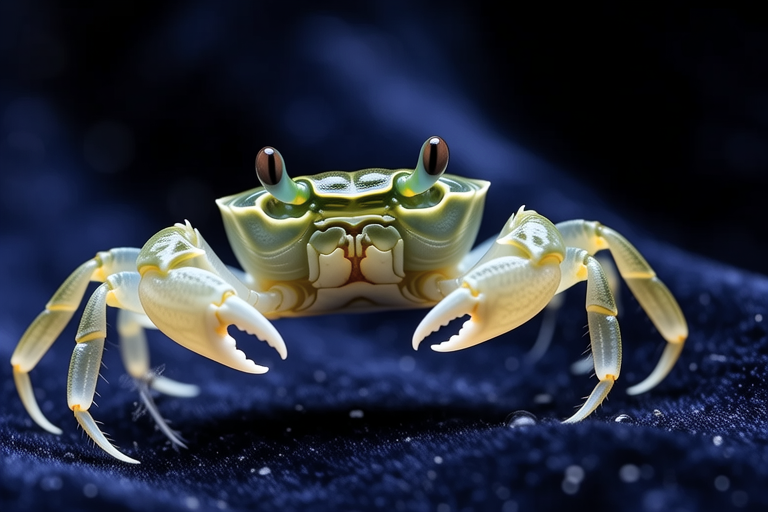
The Marvelous Pea Crabs: Tiny Guardians of Marine Ecosystems
Pea crabs, members of the family Pinnotheridae, are among the smallest crab species in the world. Despite their diminutive size, these creatures play significant roles within marine ecosystems. Their unique life cycle, habitat, and adaptations make them fascinating subjects for study. This article explores the intricacies of pea crabs, focusing on their symbiotic relationships, microscopic size, and contributions to marine biodiversity.
A Unique Life Cycle
The life cycle of pea crabs begins with eggs that are fertilized externally. The females carry thousands of eggs under their abdomen until they hatch. Once hatched, the larvae enter the planktonic stage, where they drift in the water column, feeding on microscopic organisms. After several molts, the larvae settle on a suitable host, marking the beginning of their symbiotic relationship. Unlike many other crab species, pea crabs do not undergo extensive migrations; instead, they remain close to their hosts throughout their lives.
Habitats and Adaptations
Pea crabs inhabit various marine environments, including coastal waters, estuaries, and open oceans. They are often found in association with bivalves, such as oysters, mussels, and clams, which serve as their primary hosts. These tiny crustaceans have evolved specialized appendages that allow them to penetrate the soft tissues of their hosts without causing significant damage. Additionally, pea crabs possess flattened bodies and elongated legs, enabling them to maneuver within the confined spaces of their hosts’ shells.
Symbiotic Relationships
Pea crabs engage in commensalism, a type of symbiotic relationship where one organism benefits while the other is neither helped nor harmed. In this case, the pea crabs benefit from protection and shelter provided by their hosts, while the hosts receive no direct advantage. However, some studies suggest that the presence of pea crabs may improve the reproductive success of their hosts by reducing predation pressure or enhancing nutrient availability. Recent research has also uncovered potential mutualistic interactions between pea crabs and certain species of sea cucumbers, where both parties gain from the relationship.
Microscopic Size Compared to Other Crab Species
Pea crabs are among the smallest crab species, with adult individuals measuring less than 1 centimeter in length. Their miniature stature allows them to thrive in tight spaces and exploit niches unavailable to larger crustaceans. While most crab species are known for their robust claws and powerful pincers, pea crabs have adapted their limbs for delicate manipulation rather than strength. This adaptation enables them to efficiently extract food from their hosts and navigate through narrow crevices.
Fascinating Contributions to Marine Ecosystems
Pea crabs contribute significantly to marine ecosystems by acting as bioindicators of environmental health. Their sensitivity to changes in water quality and temperature makes them valuable tools for monitoring ecosystem dynamics. Furthermore, pea crabs play a crucial role in nutrient cycling within their habitats by breaking down organic matter and facilitating its transfer between different trophic levels. Their presence can also influence the behavior of their hosts, potentially altering community structures and promoting biodiversity.
Recent Scientific Discoveries
Scientists continue to uncover new information about pea crabs, expanding our understanding of their biology and ecology. Recent studies have revealed that certain species of pea crabs exhibit complex social behaviors, such as cooperative hunting and resource sharing. Researchers have also discovered that some pea crabs possess unique chemical defenses against predators, which they secrete from specialized glands located near their mouthparts. These findings highlight the remarkable adaptability of pea crabs and underscore their importance in marine ecosystems.
Diverse Aquatic Environments
Pea crabs have adapted to survive in diverse aquatic environments, from shallow coastal waters to deep-sea trenches. Their ability to tolerate varying salinity levels, temperatures, and pressures enables them to thrive in a wide range of habitats. Some species of pea crabs have even been found living inside hydrothermal vents, where they feed on bacteria that thrive in extreme conditions. This versatility underscores the resilience of pea crabs and their capacity to occupy unique ecological niches.
Interesting Facts About Pea Crabs
- Miniature Warriors: Despite their small size, pea crabs are formidable predators within their microhabitats. They employ stealth and speed to catch prey, making them efficient hunters in the miniature world of their hosts.
- Hidden Talents: Pea crabs possess an extraordinary ability to camouflage themselves within their hosts, blending seamlessly with their surroundings. This skill helps protect them from predators and enhances their chances of survival.
- Mysterious Migrations: While pea crabs are generally sedentary, some species undertake seasonal migrations to reach optimal breeding grounds. These journeys, though short, are essential for maintaining genetic diversity within populations.
- Unlikely Allies: Pea crabs form unlikely alliances with a variety of marine species, including sponges, sea cucumbers, and even other crabs. These partnerships demonstrate the complexity and interconnectedness of marine ecosystems.
In conclusion, pea crabs are remarkable creatures that have adapted to thrive in challenging aquatic environments. Their unique life cycle, habitat preferences, and symbiotic relationships with other marine species make them fascinating subjects for study. As we continue to explore the mysteries of the ocean, pea crabs will undoubtedly reveal more about the intricate web of life that exists beneath the waves.
