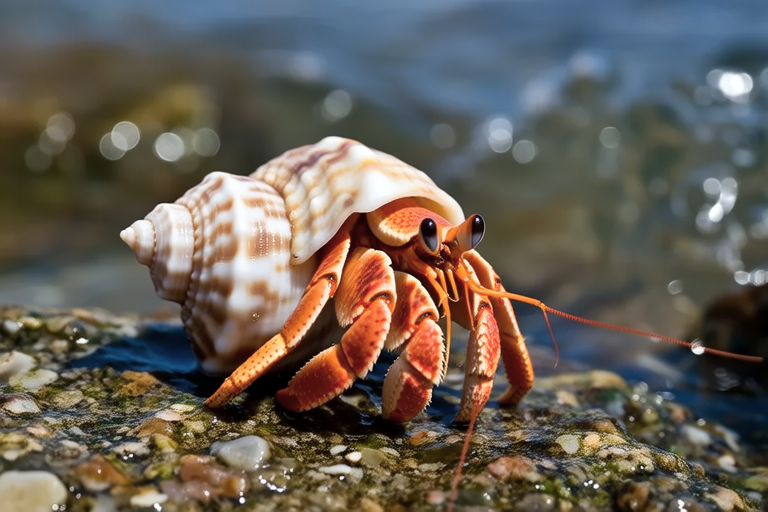
From Shell Haulers to Socialites: The Secret Life of Hermit Crabs Revealed
Imagine a creature that spends its life dragging around a borrowed home—like a tiny, armored turtle with a suitcase full of shells. Not just any shell, mind you, but one it carefully selects, tests, and sometimes even trades for. This is not science fiction. This is the daily reality of the hermit crab—a small, unassuming crustacean whose quiet existence belies a world of drama, strategy, and surprising social sophistication.
At first glance, hermit crabs seem like simple beachcombers, scuttling across sand with their oversized claws and trailing abdomens tucked into borrowed homes. But peel back the shell, and you’ll find a hidden universe of adaptation, communication, and community. These aren’t just scavengers—they’re survival artists, social architects, and environmental sentinels all in one compact package.
The Borrowed Home: A Lifeline Built on Shell Selection
Hermit crabs don’t grow their own shells. They’re born with soft, vulnerable bodies, and without protection, they’d be easy prey. So evolution handed them a brilliant workaround: they adopt empty shells from other mollusks—snails, whelks, conchs—as temporary shelters. It’s like moving into someone else’s apartment, except the lease is based on fit, safety, and status.
Choosing a shell isn’t random. Size matters. Too small, and the crab will outgrow it; too large, and it becomes a cumbersome burden, slowing down movement and making it harder to escape predators. Scientists have observed hermit crabs “trying on” shells by inserting their abdomen, rocking side to side, and even tapping the interior with their antennae—essentially conducting a full home inspection.
And when a better shell comes along? The switch can be dramatic. In what researchers call a “shell rush,” multiple crabs may gather around a newly discovered shell, forming a spontaneous auction line. One crab starts the process by testing the shell, then others join in, each assessing the fit. Suddenly, a chain reaction begins: the smallest crab takes the new shell, the next largest moves into the shell the first crab vacated, and so on—like a perfectly choreographed domino effect. It’s not just about finding a better home; it’s about timing, negotiation, and shared purpose.
More Than Just a Suitcase: Communication Through Vibrations and Antennae
Contrary to popular belief, hermit crabs aren’t silent loners. Far from it. They’re surprisingly social creatures, communicating through an intricate language of vibrations, antennae touches, and even rhythmic drumming.
When two crabs encounter each other near a desirable shell, they don’t immediately fight. Instead, they engage in a ritualized dance of assessment. Using their long antennae, they tap each other gently—like a handshake or a whisper—testing size, strength, and intentions. If the interaction goes well, they might even form temporary alliances.
Some species produce distinct vibrational signals by drumming their claws against the shell. These vibrations travel through the substrate and can signal everything from aggression to courtship. Think of it as underwater Morse code, passed through the sand and shell walls. In lab studies, scientists have recorded these signals and found patterns suggesting different messages: “I’m here,” “This shell is mine,” or even “Let’s trade.”
Even more astonishing is cooperative shell-sharing. In certain environments, hermit crabs have been observed sharing larger shells temporarily—especially during molting season, when their soft bodies are extra vulnerable. One crab might hold the shell while another rests inside, creating a kind of living shelter team. It’s a glimpse into a world where cooperation trumps competition.
Guardians of the Shore: Their Hidden Role in Marine Ecosystems
While hermit crabs may not command headlines like whales or sharks, they play a crucial role in maintaining the health of coastal ecosystems. By scavenging dead organisms, algae, and detritus, they help clean up beaches and prevent the buildup of organic waste. In doing so, they recycle nutrients and support the food web.
But their impact goes beyond cleanup duty. When they move through sand and sediment, they aerate the soil—much like earthworms do on land. This improves oxygen flow and helps microbes break down materials, enriching the habitat for other organisms. In tropical regions, hermit crabs are known to disperse seeds and spores, aiding plant colonization on sandy shores.
They’re also a vital food source. Birds, raccoons, and larger marine predators rely on hermit crabs as a protein-rich meal. Without them, entire food chains could unravel.
Sensitive Sentinels: Hermit Crabs and Environmental Change
Hermit crabs are more than just survivors—they’re sensitive barometers of environmental health. Their shells are made of calcium carbonate, which makes them vulnerable to ocean acidification. As human activities pump carbon dioxide into the atmosphere, oceans absorb much of it, leading to a drop in pH levels. This makes shells weaker and more brittle.
Studies show that in more acidic waters, hermit crabs struggle to find strong shells. Even worse, some crabs begin adopting shells that are too thin or poorly shaped, increasing their risk of predation or injury. Their ability to adapt quickly is being tested—and not always successfully.
Plastic pollution poses another threat. Microplastics often end up in the same tidal zones where hermit crabs live. Some crabs have been found carrying fragments of plastic wrapped around their shells—mistaken for natural debris. Others ingest microplastics while feeding, which can disrupt digestion and cause internal damage. The consequences ripple outward: weakened crabs mean fewer predators fed, less nutrient cycling, and degraded habitats.
Coastal development also destroys their homes. Beaches are paved, dunes are flattened, and natural shorelines are replaced with concrete. With nowhere to burrow or forage, hermit crab populations decline rapidly. And since many species are highly specialized—each needing specific shell types or microhabitats—the loss of one species can trigger cascading effects across ecosystems.
Adaptability in Action: Lessons from Tiny Survivors
What can we learn from these small, shell-hauling wanderers? Perhaps the most profound lesson lies in their relentless adaptability. Born without a permanent home, they’ve evolved to thrive on borrowing, negotiating, and improvising. They don’t wait for perfect conditions—they make do, adjust, and survive.
They teach us that vulnerability doesn’t equal weakness. A hermit crab’s soft body is protected not by armor, but by choice—by finding the right shell at the right time. It’s a reminder that strength often lies in flexibility, not rigidity.
They also challenge our assumptions about intelligence and sociality. We tend to associate complex behavior with large-brained animals—elephants, dolphins, primates. But hermit crabs demonstrate that social networks, cooperation, and communication aren’t exclusive to mammals. Simple creatures, working together, can achieve remarkable outcomes.
And perhaps most poignantly, they remind us of the hidden lives teeming just beneath the surface of everyday nature. We walk on beaches, gaze at waves, and rarely notice the tiny crabs darting between rocks. Yet, in their quiet movements, they carry stories of resilience, connection, and balance.
A Call to Wonder: Protecting the Unseen
Next time you’re on a beach, take a moment to look closer. Watch the tide line. Peer under a rock. You might see a hermit crab—its eyes gleaming, its claws waving, its shell catching the sunlight like a tiny treasure chest.
Respect that shell. It’s not just junk—it’s a lifeline. It’s a symbol of ingenuity, a testament to evolution’s creativity. And it’s home.
By protecting shorelines, reducing plastic use, and supporting sustainable coastal practices, we don’t just safeguard hermit crabs—we honor a quiet, ancient wisdom. We protect a world where every creature, no matter how small, plays a part in the grand tapestry of life.
So the next time you hear the word “hermit,” think again. These aren’t lonely souls. They’re socialites with a taste for adventure, engineers of shelter, diplomats of the tide line, and guardians of the coast. They live in borrowed homes—but their legacy is anything but temporary.
In their delicate steps across the sand, they leave behind not just footprints, but a message: adaptability is power, community is survival, and wonder is everywhere—if only we’re willing to look.
Final Thought
Perhaps the greatest secret of the hermit crab isn’t what it carries on its back—but what it teaches us about ourselves. In a world that often values permanence and ownership, this tiny traveler reminds us that the best homes aren’t built—they’re chosen. And the strongest communities aren’t forged in isolation, but in shared purpose, mutual care, and the courage to change.
Look closely. Listen quietly. The sea whispers stories in every wave—and among the shells, a crab is waiting to tell you one.
