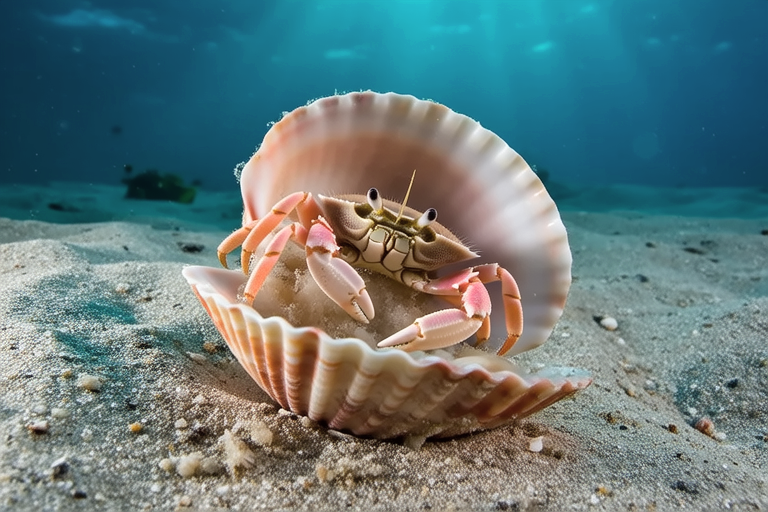
Shell Seekers Guide: Inside the Unique Relationship Between Clams and Pea Crabs
Welcome, shell seekers, to an underwater world where two unlikely partners form a unique and fascinating relationship. This guide delves into the symbiotic bond between clams and pea crabs, exploring the intricate dynamics that have evolved over millennia. We’ll uncover the secrets of their cohabitation, the benefits each organism derives, and the remarkable adaptations that make this partnership possible.
The Clam’s Role: Providing Shelter and Protection
Clams, belonging to the class Bivalvia, are mollusks with two hinged shells that open and close to allow water flow for feeding and respiration. They are found in diverse aquatic environments, from shallow coastal waters to deep ocean floors. The clam’s primary role in this symbiosis is to offer a safe haven for the pea crab, protecting it from predators and harsh environmental conditions.
Once a pea crab finds a suitable host, it enters the clam’s mantle cavity, a space between the clam’s body and its shell. The crab’s small size and flattened shape enable it to fit snugly within this protective enclosure. Here, it enjoys a stable environment, shielded from the dangers of the open sea. The clam’s hard shell acts as a fortress, safeguarding the crab against larger predators like fish and octopuses.
The Pea Crab’s Contribution: Enhancing Clam Reproduction
Pea crabs (genus Pinnotheres) are tiny crustaceans that inhabit various bivalve species, including clams. These crabs have adapted to live inside their hosts, developing specialized claws and legs that allow them to navigate and feed within the clam’s mantle cavity. While pea crabs primarily benefit from the protection offered by their hosts, they also play a crucial role in enhancing clam reproduction.
Research suggests that the presence of pea crabs can improve the reproductive success of their host clams. By consuming excess gametes (eggs or sperm) and detritus, pea crabs help maintain optimal conditions for the remaining gametes, potentially increasing the chances of successful fertilization. Additionally, the crabs’ movements within the clam’s mantle cavity may stimulate the release of eggs and sperm, further aiding in reproduction.
Unique Adaptations and Behaviors
The symbiotic relationship between clams and pea crabs has led to several remarkable adaptations on both sides. For instance, pea crabs have developed elongated appendages that allow them to reach food particles suspended in the water flowing through the clam’s gills. This adaptation ensures that the crab receives sufficient nutrition without competing directly with the clam for resources.
Clams, on the other hand, have evolved thicker shells in areas where pea crabs are commonly found. This thickening provides additional protection for both organisms and reduces the risk of damage to the clam’s vital organs. Moreover, some clams have been observed to grow faster when hosting pea crabs, possibly due to the enhanced nutrient availability resulting from the crab’s feeding activities.
Habitats and Distribution
The symbiotic relationship between clams and pea crabs is widespread across the globe, occurring in various marine ecosystems. Clams are found in oceans and seas around the world, from tropical coral reefs to cold, temperate waters. Pea crabs have been documented in both saltwater and brackish environments, indicating their adaptability to different salinity levels.
In North America, this partnership is particularly prevalent along the Pacific coast, where species such as the manila clam (Ruditapes philippinarum) and the Japanese littleneck clam (Tresus nuttallii) often host pea crabs. In Europe, the common cockle (Cerastoderma edule) and the Baltic tellin (Tellina tenuis) are known to provide homes for pea crabs. The distribution of these partnerships highlights the versatility and resilience of both organisms in adapting to diverse ecological niches.
Challenges and Threats
Despite the numerous benefits derived from their symbiotic relationship, clams and pea crabs face various challenges and threats in their natural habitats. Climate change, pollution, and overfishing pose significant risks to marine ecosystems, affecting the availability of suitable hosts for pea crabs and the overall health of clam populations.
For example, rising sea temperatures and increased acidity can stress clams, leading to weakened shells and reduced reproductive capabilities. Similarly, pollution from agricultural runoff and industrial waste can introduce harmful chemicals into the water, negatively impacting both clams and pea crabs. Conservation efforts aimed at protecting marine environments and promoting sustainable fishing practices are essential for maintaining the delicate balance of this symbiotic relationship.
Conclusion: Celebrating a Unique Partnership
The symbiotic relationship between clams and pea crabs is a testament to the complexity and beauty of life in the ocean. This mutually beneficial arrangement showcases the incredible adaptability of marine organisms and the intricate web of interactions that sustain our planet’s ecosystems. As we continue to explore and understand these relationships, it becomes increasingly clear that preserving the health of our oceans is crucial for the survival of countless species, including the humble clam and its tiny crab companion.
By supporting conservation initiatives and adopting sustainable practices, we can help ensure that future generations will be able to witness the wonders of this unique partnership. So, the next time you find yourself by the seashore, take a moment to appreciate the hidden world beneath the waves and the extraordinary bonds that exist within it.
