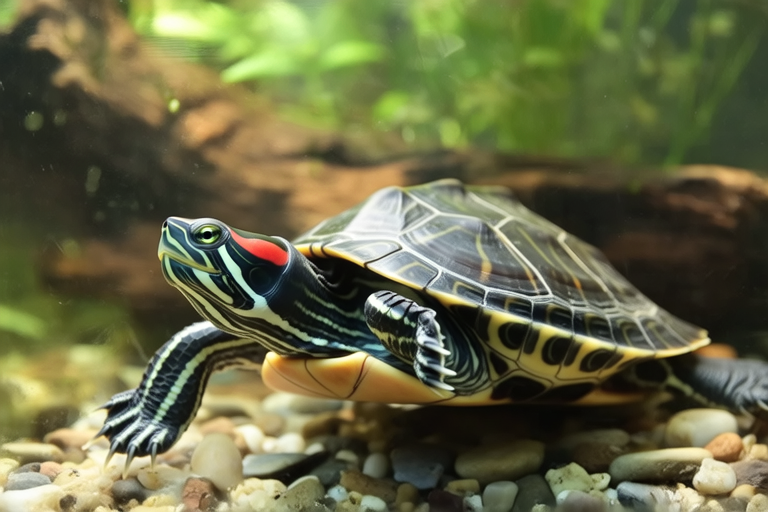
Top 10 Care Tips for a Happy Red-Eared Slider Turtle
The red-eared slider (Trachemys scripta elegans) is one of the most popular pet turtles due to its hardiness, striking appearance, and relatively low-maintenance care requirements. However, to ensure your red-eared slider remains healthy and happy, it’s essential to provide appropriate care and attention. This comprehensive guide will cover ten key aspects of red-eared slider care, from tank setup to diet and disease prevention.
1. Proper Tank Setup
Adequate space is crucial for your red-eared slider’s well-being. A young turtle requires at least 10 gallons of water per inch of shell length, while an adult needs around 40 gallons or more. The tank should be long enough to allow swimming, with a depth that permits diving. For a single adult, a 75-gallon tank is recommended.
Equip the tank with a sturdy filtration system to maintain water quality. Filters should be chosen based on the tank size and the number of turtles. Additionally, consider adding a submersible heater to keep the water temperature between 75°F and 80°F (24°C and 27°C).
2. Water Quality Maintenance
Maintaining clean water is vital for your turtle’s health. Regular water changes are necessary; aim for partial changes every week and complete changes every month. Test the water regularly for ammonia, nitrite, and pH levels. Keep the pH between 6.5 and 8.0, and avoid high ammonia and nitrite levels.
To prevent algae growth, limit direct sunlight exposure and reduce lighting duration. Adding aquarium salt can also help control bacteria and parasites, but consult a veterinarian before introducing any additives.
3. Temperature Regulation
Red-eared sliders are ectothermic, meaning they rely on external heat sources to regulate their body temperature. Provide a basking area with a heat lamp that maintains a surface temperature of 85°F to 95°F (29°C to 35°C). Ensure the basking area is large enough for the turtle to fully extend its body and limbs.
In addition to basking, the water temperature should be maintained between 75°F and 80°F (24°C and 27°C). Use a submersible heater and a thermometer to monitor these temperatures accurately. Avoid extreme fluctuations in temperature, as they can stress the turtle and lead to health issues.
4. Diet Recommendations
A balanced diet is essential for a healthy red-eared slider. Offer a variety of foods, including commercial turtle pellets, fresh vegetables, and occasional live prey like earthworms or crickets. Feed adult turtles daily, providing as much food as they can consume in 15 minutes. Juveniles may require more frequent feedings, up to three times a week.
Vary the diet to include leafy greens (e.g., romaine lettuce, dandelion greens), carrots, and squash. Supplement the diet with calcium and vitamin D3 to support bone health, especially for growing turtles. Consult a veterinarian for specific supplementation guidelines tailored to your turtle’s age and size.
5. Basking Area Essentials
The basking area should be designed to mimic the natural habitat of red-eared sliders. Provide a dry, easily accessible platform where the turtle can rest and warm up. Use a secure, non-slip substrate such as cork bark or a reptile hammock.
Ensure the basking area is well-lit with UVB light to facilitate calcium absorption and vitamin D3 production. Replace the UVB bulbs every six months or according to the manufacturer’s recommendations. Position the basking area away from the water to prevent accidental submersion during basking.
6. Health Monitoring Tips
Regular health checks are crucial for early detection of potential issues. Look for signs of illness, such as lethargy, loss of appetite, swollen eyes, or unusual lumps or bumps. Check the shell for cracks, soft spots, or discoloration, which could indicate metabolic bone disease or other conditions.
Monitor the turtle’s weight and overall condition. A sudden change in weight or behavior could signal an underlying health problem. Schedule annual veterinary check-ups to ensure your turtle remains in optimal health.
7. Handling Advice
Handle your red-eared slider gently and infrequently to minimize stress. Support the turtle’s body with both hands, ensuring its legs and head are securely held. Avoid lifting the turtle by its tail, as this can cause injury.
Wash your hands thoroughly before and after handling to prevent the spread of bacteria. Be cautious when interacting with young children, as improper handling can lead to accidents or injuries.
8. Growth Considerations
Red-eared sliders grow rapidly during their first few years, reaching full size within five to eight years. Provide ample space and adjust the tank setup as the turtle grows. Monitor growth rates and consult a veterinarian if you notice stunted growth or deformities.
Be prepared for the long-term commitment involved in owning a red-eared slider. These turtles can live 20 to 40 years with proper care, so plan accordingly for their ongoing needs.
9. Potential Common Diseases
Metabolic bone disease (MBD) is a prevalent issue in red-eared sliders, caused by insufficient calcium intake or inadequate UVB exposure. Symptoms include soft shells, weak limbs, and difficulty moving. Prevent MBD by providing a balanced diet rich in calcium and ensuring adequate UVB lighting.
Respiratory infections can occur if the turtle is exposed to cold temperatures or poor water quality. Signs include nasal discharge, labored breathing, and lethargy. Maintain proper water temperature and hygiene to prevent respiratory issues.
10. Environmental Enrichment Suggestions
Provide environmental enrichment to stimulate your turtle’s natural behaviors and mental well-being. Add floating platforms, rocks, and plants to create hiding spots and encourage exploration. Rotate toys and decorations periodically to keep the environment interesting.
Consider introducing a second turtle for companionship, but ensure they are compatible and the tank is spacious enough to accommodate them. Always supervise interactions to prevent aggressive behavior or injury.
By following these ten care tips, you can ensure your red-eared slider leads a healthy, happy life. Remember, responsible ownership involves continuous learning and adaptation to meet your turtle’s changing needs. With dedication and effort, you can provide a stimulating and supportive environment for your beloved pet.
