The Unique Life of Pea Crabs: A Dive into Marine Biology
Pea crabs (Pinnotheridae) are among the smallest and most intriguing members of the crab family. These tiny crustaceans have adapted to live within the gills or mantle cavities of various bivalves, such as oysters, mussels, and scallops. Their symbiotic relationships, microscopic size, and unique anatomical features make them a fascinating subject for marine biologists and enthusiasts alike.
Anatomy and Size
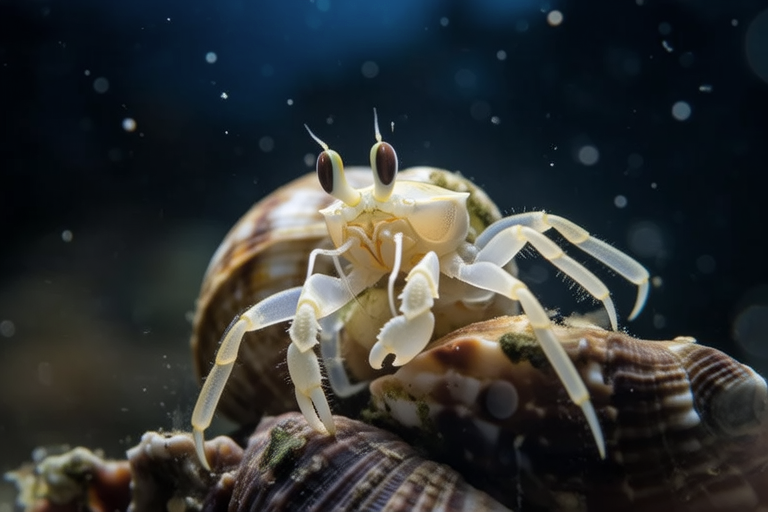
Pea crabs are named for their diminutive size, typically ranging from 2 to 8 millimeters in length. This makes them one of the smallest crab species known to science. Their small size is an adaptation that allows them to fit comfortably inside the protective shells of their host bivalves. Unlike larger crab species, pea crabs have a flattened body shape, which helps them maneuver within the tight confines of their hosts. They possess four pairs of walking legs and two chelipeds (claws), though their claws are significantly smaller than those of their larger cousins. Their eyes are mounted on short stalks, providing them with limited vision but enough to detect potential threats.
Symbiotic Relationships
Pea crabs engage in a mutualistic relationship with their bivalve hosts. The crabs benefit from protection from predators and a constant supply of food particles filtered by the bivalves. In return, the crabs may help clean the gills of their hosts, removing parasites and debris. This relationship is essential for both parties, as it enhances their survival rates in challenging marine environments.
Reproduction and Lifecycle
The reproductive cycle of pea crabs is closely tied to their host bivalves. Mating occurs within the safety of the bivalve’s shell, ensuring that offspring have immediate protection. Females carry fertilized eggs on their undersides until they hatch. Juvenile pea crabs must find a suitable host quickly after hatching, as they are highly vulnerable without the protection of a bivalve shell. Once inside, they undergo several molts before reaching adulthood.
Ecological Role
Despite their small size, pea crabs play a significant role in marine ecosystems. By cleaning the gills of their hosts, they contribute to the overall health of bivalve populations. Additionally, they serve as a food source for larger predators, helping to maintain the balance of the food chain. Their presence can also indicate the health of local marine ecosystems, as their survival depends on the well-being of their host species.
Discovery and Historical Significance
The first recorded discovery of pea crabs dates back to the 17th century when naturalists began documenting these tiny creatures living within oysters. Over time, they became symbols of the intricate relationships found within marine ecosystems. Early researchers were fascinated by the idea that such small organisms could coexist with much larger ones, leading to numerous studies and observations. Pea crabs have been featured in various scientific publications and educational materials, helping to raise awareness about the importance of marine biodiversity.
Myths and Misconceptions
Throughout history, there have been many myths and misconceptions surrounding pea crabs. Some believed that they were harmful to their hosts, causing illness or death. However, extensive research has shown that the relationship between pea crabs and their bivalve hosts is generally beneficial. Another myth suggests that consuming oysters containing pea crabs could be dangerous. While rare, there have been no documented cases of harm caused by ingesting pea crabs. It’s important to dispel these myths and promote accurate information about these fascinating creatures.
Comparison with Other Crustaceans
Compared to other crustaceans, pea crabs exhibit unique behaviors and adaptations. For instance, while most crabs are free-swimming or burrowing, pea crabs spend their entire lives within the confines of their host bivalves. This sedentary lifestyle requires different survival strategies, such as developing specialized appendages for filtering food particles and efficient waste management. Their small size and reliance on their hosts also set them apart from larger, more aggressive crab species that compete for resources in open waters.
Current Research and Conservation Efforts
Recent studies have focused on understanding the genetic diversity of pea crabs and how climate change might affect their habitats. Researchers are also exploring the potential for pea crabs to serve as bioindicators of environmental health. Conservation efforts often involve protecting the habitats of their host bivalves, ensuring that both species thrive. Public education campaigns aim to raise awareness about the importance of preserving marine ecosystems and the roles played by organisms like pea crabs.
Conclusion
Pea crabs are remarkable examples of nature’s adaptability and the intricate relationships that exist within marine ecosystems. Their symbiotic relationships, microscopic size, and unique anatomical features make them a captivating subject for study. By continuing to explore and protect these tiny creatures, we can gain valuable insights into the broader workings of our oceans and the importance of maintaining healthy marine environments.
