The Hidden World of Chameleons: What They Can Teach Us
Chameleons have long captivated the human imagination with their extraordinary ability to change colors. These lizards, found predominantly in Africa and Madagascar, are not just masters of disguise but also offer valuable insights into survival strategies and environmental adaptation. This article delves into the unique aspects of chameleon behavior, biology, and habitat, exploring what these fascinating creatures can teach us about adaptability, perception, and communication.
Color Changing Capabilities
One of the most remarkable features of chameleons is their ability to alter their skin color. Contrary to popular belief, this isn’t solely for camouflage. While chameleons can blend into their surroundings to avoid predators or sneak up on prey, their color-changing abilities serve multiple purposes. For instance, they use it to communicate emotions and intentions. A calm chameleon might display green hues, while a stressed one may turn darker. Moreover, these changes help regulate body temperature, allowing them to cool down or warm up as needed.
Specialized Eyes and Feet
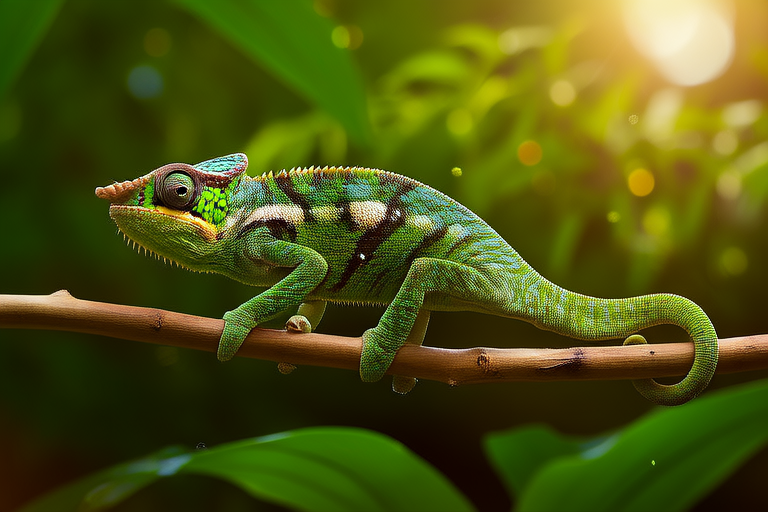
Chameleons possess some of the most unique physical attributes among reptiles. Their eyes can move independently, providing a 360-degree field of vision. This allows them to spot potential threats or prey without moving their head, enhancing their hunting efficiency and overall safety. Their feet are another marvel of evolution; each foot has two toes pointing inward and three pointing outward, forming a ‘V’ shape that helps them grip branches securely. This adaptation is crucial for navigating their arboreal habitats.
The Tongue: A Hunting Weapon
The chameleon’s tongue is perhaps its most famous weapon. It can extend up to twice the length of its body, enabling it to catch insects from considerable distances. The tip of the tongue is covered in sticky mucus, ensuring that no prey escapes once it makes contact. This rapid and precise strike demonstrates the efficiency of nature’s design, offering lessons in precision and speed.
Lessons from Chameleons
What can humans learn from chameleons? Firstly, the importance of adaptability. In a rapidly changing world, being able to adjust to new environments and circumstances is crucial for survival. Secondly, the value of perception. Chameleons’ unique eyesight reminds us that there are always different perspectives and ways of seeing the world. Lastly, effective communication. Just as chameleons use color to convey messages, so too can humans benefit from clearer and more direct forms of expression.
Habitats and Conservation
Chameleons thrive in diverse environments, including rainforests, deserts, and savannas. However, their habitats are under threat due to deforestation, climate change, and urbanization. Preserving these ecosystems is vital not only for chameleons but also for countless other species that depend on them. Conservation efforts, such as reforestation projects and protected areas, play a significant role in safeguarding these precious habitats.
Conclusion
The hidden world of chameleons reveals much about life’s intricacies and challenges. From their color-changing abilities to their specialized eyes, feet, and tongues, these creatures embody adaptability, perception, and communication. As we continue to explore and understand them, let us also commit to protecting their natural habitats. By doing so, we ensure that future generations will have the opportunity to marvel at these incredible animals and learn from their remarkable adaptations.
