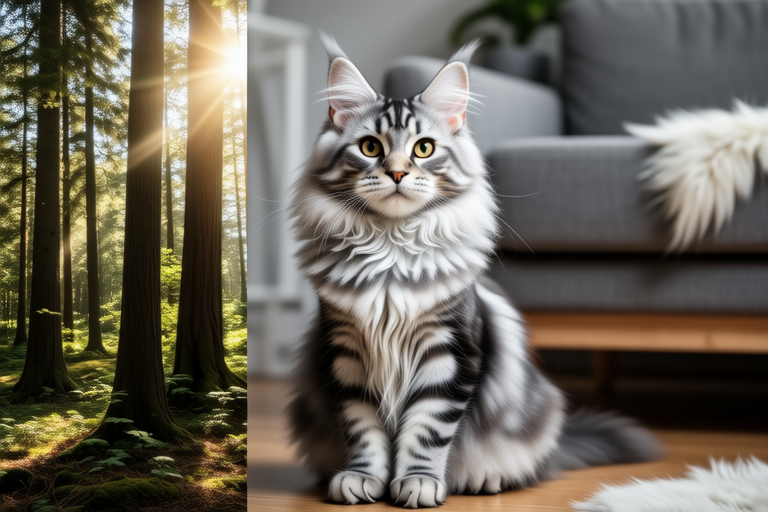
From Forests to Couches: The Endearing World of Maine Coons
The Maine Coon is a breed that has captured the hearts of many with its large, robust frame and gentle demeanor. Originating from the cold, rugged landscapes of New England, these cats have a storied past that dates back centuries. Legend has it that they are descendants of longhaired cats brought over by Vikings, while others believe they are the result of domestic cats mating with semi-feral breeds.
Regardless of their exact origin, one thing is certain: Maine Coons have adapted marvelously to life in human homes, bringing with them a legacy of loyalty and companionship. Their presence in American households can be traced back to the early 1800s, where they were prized for their hunting prowess and affectionate nature. Today, they remain one of the most popular breeds, cherished for their distinctive looks and amiable personalities.
Distinctive Physical Traits
Maine Coons are easily recognizable by their striking appearance. They possess a sturdy, muscular build, with males often weighing between 13-18 pounds and females slightly smaller. Their coats are thick and water-resistant, perfect for withstanding harsh winter conditions. These cats come in a variety of colors and patterns, but their most defining feature is their bushy tail, which they use like a blanket to keep warm.
Another hallmark of the Maine Coon is their large, tufted ears, which are designed to protect against the elements. Their paws are also uniquely suited to their environment; they are large and webbed, allowing them to walk gracefully on snow. Their eyes, typically green or gold, are expressive and full of curiosity, adding to their charm.
Friendly and Adaptable Nature
Maine Coons are known for their friendly, outgoing personalities. They are incredibly social animals, often forming strong bonds with their human families. Unlike some other breeds, Maine Coons enjoy interacting with people and are generally comfortable around strangers. This makes them excellent companions for households with children or other pets.
One study found that Maine Coons are particularly adept at understanding human emotions, responding to their owner’s moods with a mix of playfulness and comfort. Their adaptability means they thrive in a variety of environments, from bustling city apartments to quiet rural homes. Whether you live in a small house or a large estate, a Maine Coon will adjust seamlessly to your lifestyle.
Intelligence and Social Behavior
These cats are not just beautiful; they are also intelligent and resourceful. Anecdotes abound of Maine Coons solving puzzles and figuring out complex mechanisms to reach treats or toys. One notable story involves a Maine Coon named Oliver, who learned to open doors by pushing a lever with his paw. Such stories highlight the breed’s problem-solving skills and determination.
Maine Coons are also highly social, often seeking out human interaction and companionship. They are known to follow their owners around the house, offering their support during tasks and even curling up beside them on the couch. Their intelligence extends to their ability to learn commands and tricks, making them enjoyable to train and interact with.
Vocalizations and Grooming Habits
Maine Coons have a unique way of communicating. While they may not be as vocal as some breeds, when they do meow, their voices are often described as melodic and trilling. Some owners report that their Maine Coons have developed a habit of ‘talking’ back to them, responding to questions with chirps and purrs.
Grooming is another area where Maine Coons stand out. Despite their long, luxurious coats, they are relatively low-maintenance compared to other long-haired breeds. They have a natural instinct to groom themselves, and regular brushing can help maintain their coat’s health and prevent matting. Their grooming habits reflect their wild ancestors’ need to stay clean and prepared for any situation.
From Wild Ancestors to Beloved Pets
Before becoming beloved pets, Maine Coons were skilled hunters, adept at catching rodents and other small prey. Their wild instincts are still evident today, with many Maine Coons enjoying games that simulate hunting, such as chasing laser pointers or toy mice. However, their role in modern households is far more peaceful.
In contrast to their wild ancestors, today’s Maine Coons are content to spend their days lounging on comfortable furniture, exploring their indoor environments, and providing companionship to their human families. Their transformation from forest dwellers to couch companions is a testament to their adaptability and enduring appeal.
Tips for Caring for a Maine Coon
While Maine Coons are generally healthy and hardy, they do have specific care requirements. Regular veterinary check-ups are essential, especially given their size and potential for joint issues. A balanced diet rich in nutrients is crucial for maintaining their energy levels and overall health.
Providing ample space for exercise and play is important, as Maine Coons are active and curious creatures. Interactive toys and climbing structures can help satisfy their natural instincts and keep them entertained. Regular grooming sessions are also necessary to keep their coats in top condition.
Finally, creating a nurturing environment that fosters their social nature is key. Spend time interacting with your Maine Coon, engage in activities together, and ensure they feel loved and valued. By meeting their needs, you’ll help ensure a happy, healthy life for your feline friend.
