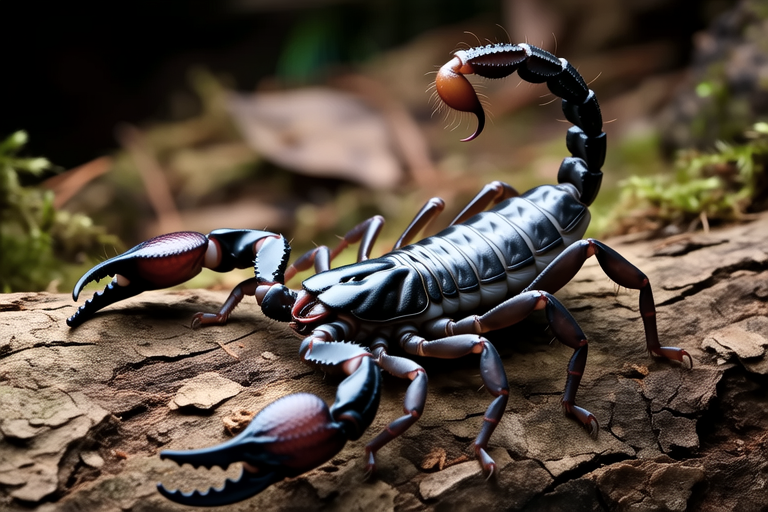
Heterometrus Spinifer: A Unique Spider with Fascinating Characteristics
The world of spiders is vast and diverse, encompassing thousands of species with varied physical traits, behaviors, and ecological roles. Among these, Heterometrus spinifer stands out due to its unique physical characteristics, intriguing behavior, and significant presence in its ecosystem. This article delves into the specifics of this spider, providing insights into its physical features, habitat, behavior, and its place in the broader context of its genus and ecosystem.
Physical Characteristics
Heterometrus spinifer, commonly known as the hairy scorpion-tailed spider, is a medium-sized spider with a distinctive appearance. It typically grows up to 6 cm in body length, with females being slightly larger than males. The most striking feature of this spider is its robust abdomen, which is covered in dense, long hairs that give it a fuzzy appearance. These hairs serve multiple purposes; they act as sensory organs, aiding in detecting prey and potential threats, and also help in camouflage by breaking up the spider’s outline against the forest floor.
Compared to other members of the Heterometrus genus, such as H. bengalensis and H. longimamma, H. spinifer has longer legs and a more pronounced abdomen. Its coloration varies from light brown to dark reddish-brown, often with darker markings on the abdomen. This coloration helps it blend into its natural habitat, providing excellent camouflage against predators.
Habitat and Distribution
Heterometrus spinifer is native to Southeast Asia, where it can be found in countries like Thailand, Malaysia, and Indonesia. It thrives in tropical rainforests, where the humid climate and dense vegetation provide ideal conditions for its survival. The spider is typically found at elevations ranging from sea level to 1,000 meters above sea level. It prefers habitats with thick underbrush and fallen logs, where it can build its web and hide from potential threats.
The specific environmental preferences of H. spinifer make it well-suited to life in the dense forests of Southeast Asia. Its ability to thrive in these environments underscores its importance in the local ecosystem. However, deforestation and habitat destruction pose significant threats to the survival of this species, highlighting the need for conservation efforts.
Behavior and Diet
Like many spiders, Heterometrus spinifer is primarily nocturnal, emerging at night to hunt for food. It constructs a web that is less intricate compared to orb-weaving spiders but still effective for capturing prey. The spider waits at the center of its web, relying on vibrations to detect when a creature has been ensnared. Once prey is captured, the spider immobilizes it with venom before consuming it.
The diet of H. spinifer consists mainly of insects, though it may occasionally feed on small vertebrates. The venom of H. spinifer is potent enough to paralyze its prey quickly, ensuring that the spider does not lose its meal to scavengers. This hunting strategy is crucial for the spider’s survival, as it ensures a steady supply of food in an environment where competition for resources can be intense.
Comparatively, H. spinifer is less aggressive towards humans than some of its relatives, such as H. petersii, which is known for its defensive behavior. While encounters with H. spinifer can be startling, bites are rare and usually not dangerous to humans. The venom is primarily used to subdue prey, and the spider will only bite in self-defense if threatened.
Myths and Scientific Discoveries
Throughout history, spiders have been the subject of numerous myths and legends, and H. spinifer is no exception. In some cultures, the hairy appearance of this spider has led to beliefs that it possesses magical powers or is associated with witchcraft. These myths, while fascinating, do not reflect the true nature of the species.
From a scientific perspective, H. spinifer has been the subject of several studies aimed at understanding its biology and behavior. Research has focused on the composition of its venom, which contains a variety of toxins that target different aspects of the nervous system of its prey. Understanding these toxins could have implications for medical research, particularly in the development of new painkillers or treatments for neurological disorders.
Additionally, the spider’s web-building techniques have been studied to gain insights into the evolutionary adaptations that have allowed it to survive in its specific ecological niche. These studies contribute to our broader understanding of arachnid biology and ecology.
Ecosystem Role
In its ecosystem, Heterometrus spinifer plays a vital role as both predator and prey. As a predator, it helps control insect populations, preventing overpopulation and the subsequent damage to plant life. This balance is essential for maintaining the health of the forest ecosystem.
As prey, H. spinifer serves as a food source for various animals, including birds, reptiles, and other spiders. This interconnectedness highlights the importance of conserving this species and its habitat. The loss of H. spinifer could have cascading effects throughout the ecosystem, potentially leading to imbalances that could affect other species.
Conservation Status and Threats
Currently, Heterometrus spinifer is listed as “Least Concern” on the IUCN Red List, indicating that it is not currently at risk of extinction. However, this status does not mean that the species is safe from threats. Habitat destruction, particularly through deforestation and land conversion, poses a significant risk to the survival of this spider. Additionally, climate change could alter the spider’s habitat, making it less suitable for its survival.
To address these threats, conservation efforts focus on protecting the remaining habitats of H. spinifer and promoting sustainable practices that minimize human impact on the environment. Public awareness campaigns and educational programs also play a crucial role in fostering a greater appreciation for the species and its ecological importance.
Conclusion
Heterometrus spinifer is a fascinating species with unique physical characteristics, behaviors, and ecological roles. Its hairy abdomen, nocturnal hunting habits, and potent venom make it a standout member of the Heterometrus genus. By understanding and appreciating this species, we can better protect it and its habitat, ensuring its continued existence for future generations.
